
Art is a Struggle that I Want to Continue
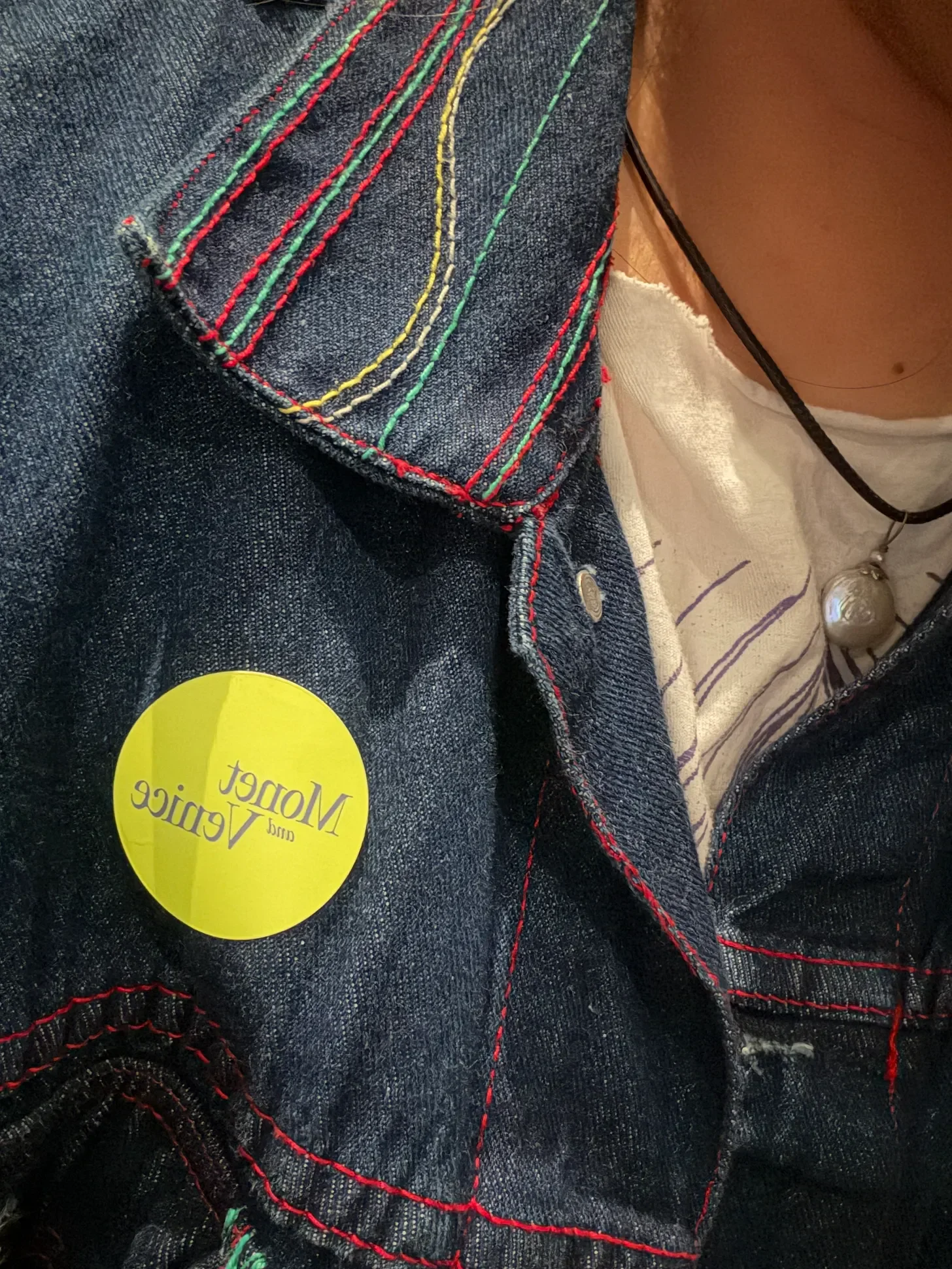
My Experience Seeing Monet and Venice
This past week, I got to go to SF and I got to see the Monet and Venice exhibition that is currently on display at the de Young Museum. I’m a bit ashamed to say that I haven’t really been to as many museums or galleries as I’d wish, but that made it feel like an even bigger privilege to see this particular exhibition. After all, Monet is one of my most impactful artistic inspirations.
Monet and Venice focused on the small time period in which he traveled to Venice as a sort of break from his other work. Feeling a bit lost with his waterlilies, Monet found new clarity while capturing the otherworldly qualities of Venice’s mixture of rich architecture and dazzling waterscape. The exhibition described this time as the mental boost he needed to continue his waterlily paintings.
The last time I had the chance to see a Monet painting was around a decade ago— The Portal of Rouen Cathedral in Morning Light at the Getty Museum. I hardly remember that at this point and my ability to look at paintings has evolved much since then. Getting to see the colors and the texture in person now was like eye candy for me and if it weren’t for being so busy, I could seriously take up a chair and try to read them like a book.
I realize that I have so much to learn still as a painter— Monet’s understanding of light and color is beyond me. The atmospheres feel understated, yet are so engulfing, they invite you to look from every angle. Every brushstroke and every color is intentional, nothing in particular stands out in a way that demands attention over anything else. It felt like he observed everything and still managed to balance it all as a cohesive whole.
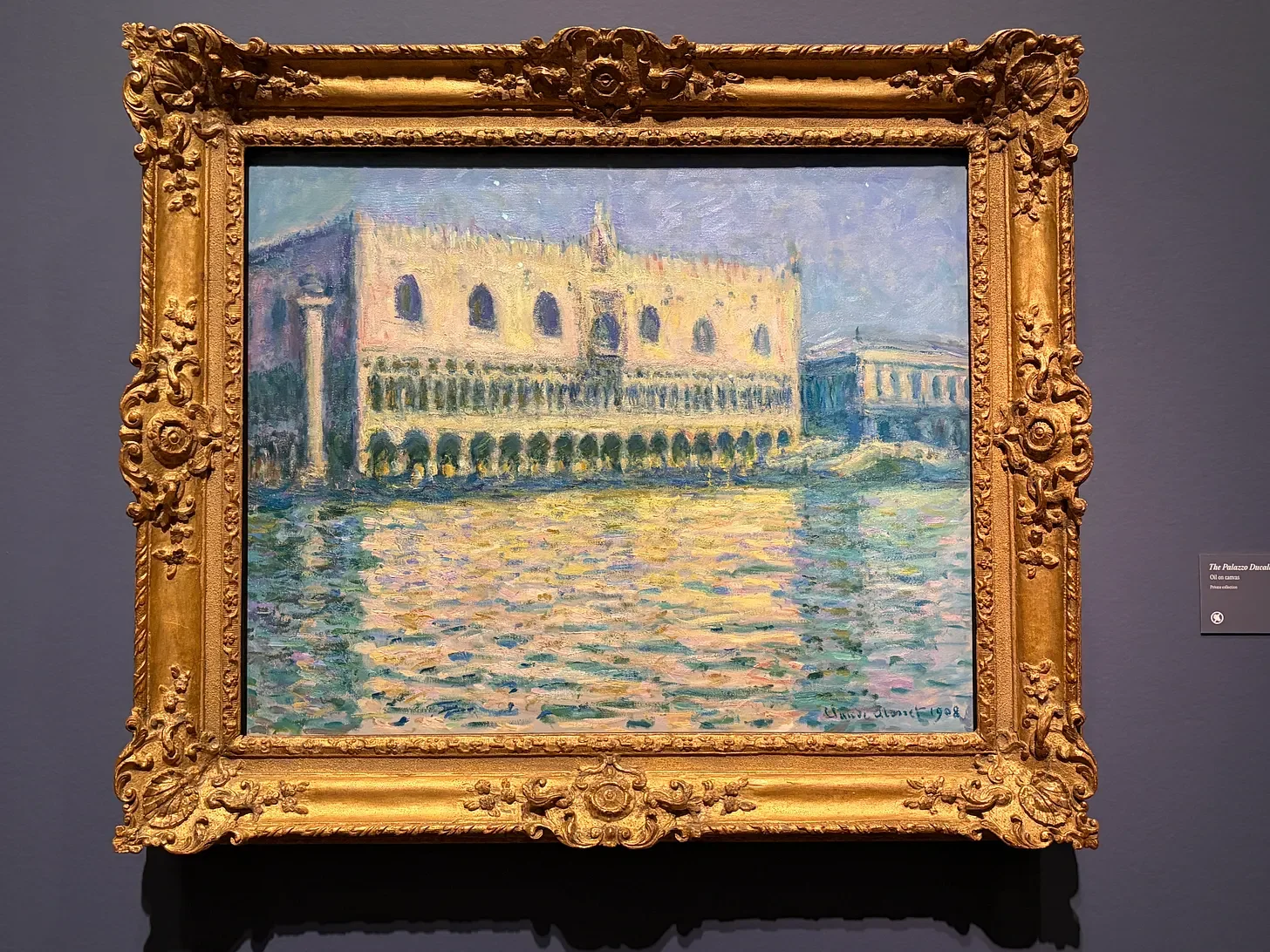
Claude Monet, The Doges Palace, Venice. 1908, Oil on canvas, de Young Museum, San Francisco
To my surprise, I was drawn to a red violet color that I noticed a lot in his Venice paintings. Maybe because it’s a color I’ve hardly used, but they added a lot of dimension into the palette. It provided a pulse to the serene imagery, lifting it from becoming too dreary. I imagine it was sunrise or maybe sunset— did he chose this time frame so he could add this pop of color?
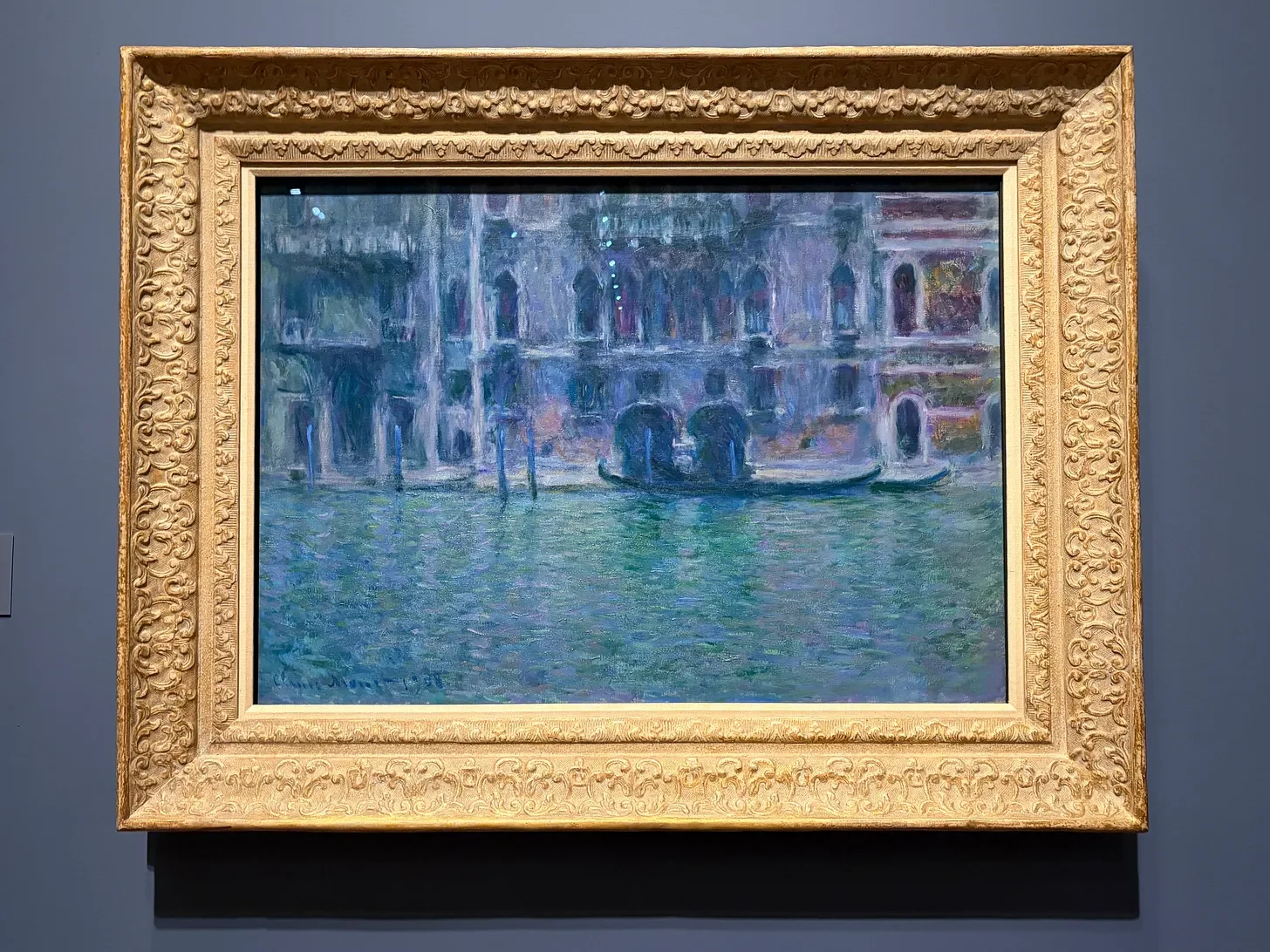
Claude Monet, Palazzo da Mula, Venice. 1908, oil on canvas, de Young Museum, San Francisco
Another aspect that I enjoyed with Monet’s paintings was once again the balance he demonstrated but in terms of the composition and the subject. For the most part, the architecture and the water were very balanced— basically split down the middle. Is it to say the two are equal? Is it a way to almost disregard the subject at all and to completely focus on the light and atmosphere? The exhibition also pointed out the striking lack of people in these paintings. I think this is also a way to avoid distraction from the overall feel.
It seems funny that he went to this iconic location and chose to focus on the lighting and colors over any specific identifying details. It was mentioned that he initially avoided painting Venice at all because it was “too beautiful.” Although his paintings wouldn’t be the best visual to offer a detailed look at Venice, they illustrate a perspective that only Monet could create.
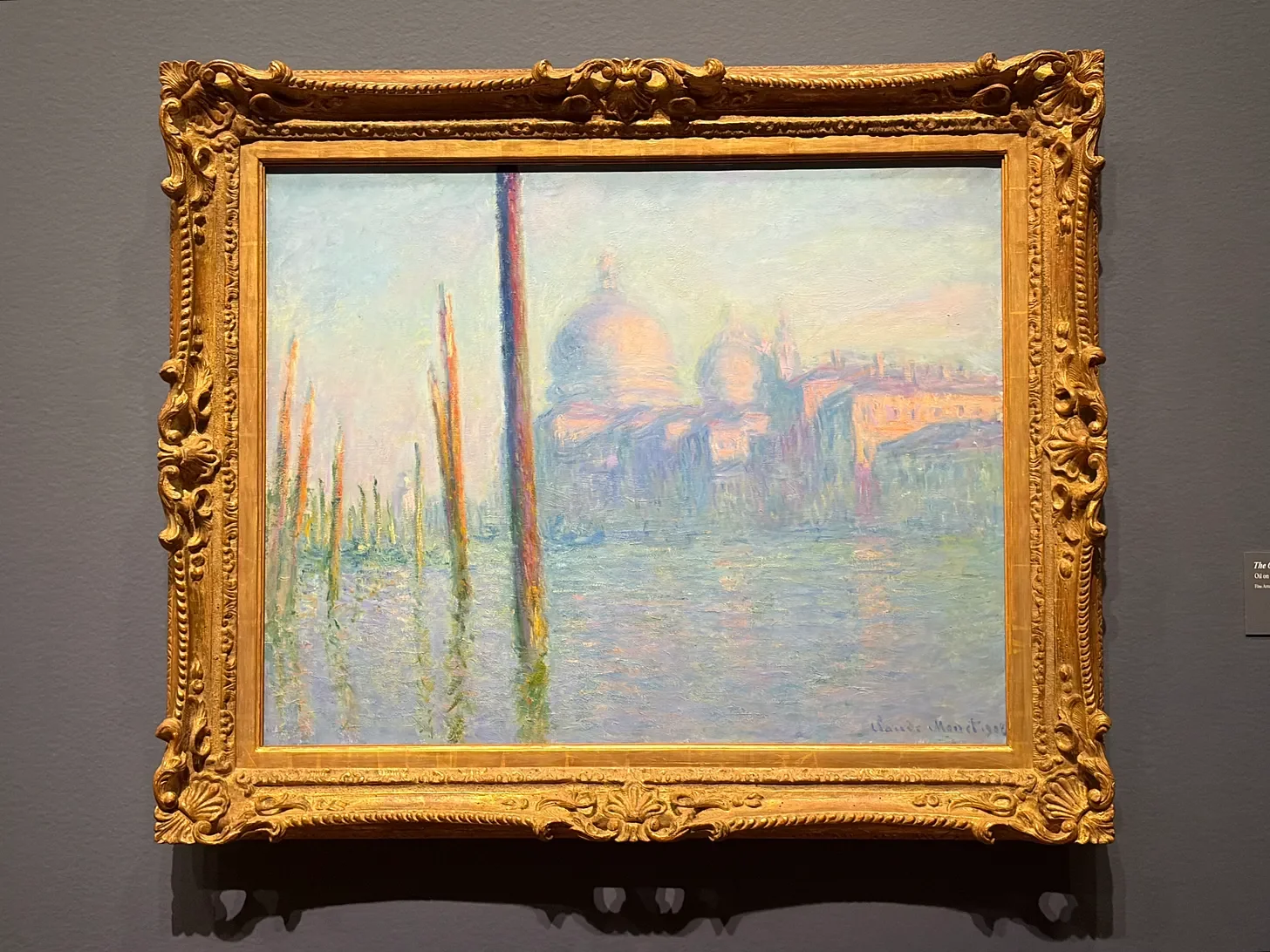
Claude Monet, The Grand Canal, Venice. 1908, oil on canvas, de Young Museum, San Francisco
I saw the beauty of Venice through the intersection of the architecture and the waterscape— the chemistry between these components was illuminated by Monet and his lens. The symbols to human creativity sat beside the natural beauty of the water both as just reflections of color and light, which spoke to what really makes Venice unique. It left me with a feeling that will continue to linger with me.
More Art and More Struggling!
After seeing the Monet exhibition, I immediately felt inspired to make some art of my own. I still had time in SF to do some solo exploring, so I decided to take a page from Monet’s book and sketch on the street. I originally planned on doing watercolor, but after seeing Monet’s textures, I opted for oil pastels.
These sketches were going to be extra special for me since it would be the last pages in my sketchbook that I’ve had for four years. This sketchbook documents a wide development in my art. Originally, started in my last year of college and witnessed several interests and phases since then. I think ending it here would be a nice way to cap it off.
I’ve gone to school for art, I’ve done public sketching, and plein air painting before, but still it’s a different beast to sketch in a busy street where you’re mostly just in the way. Only for one of my sketches did I draw somewhere high traffic and it’s not for the weak. It does build character and skills— it made me really take in what I wanted to capture and quickly. It required me to actually sit with myself and be present in my experience, be it good or bad.
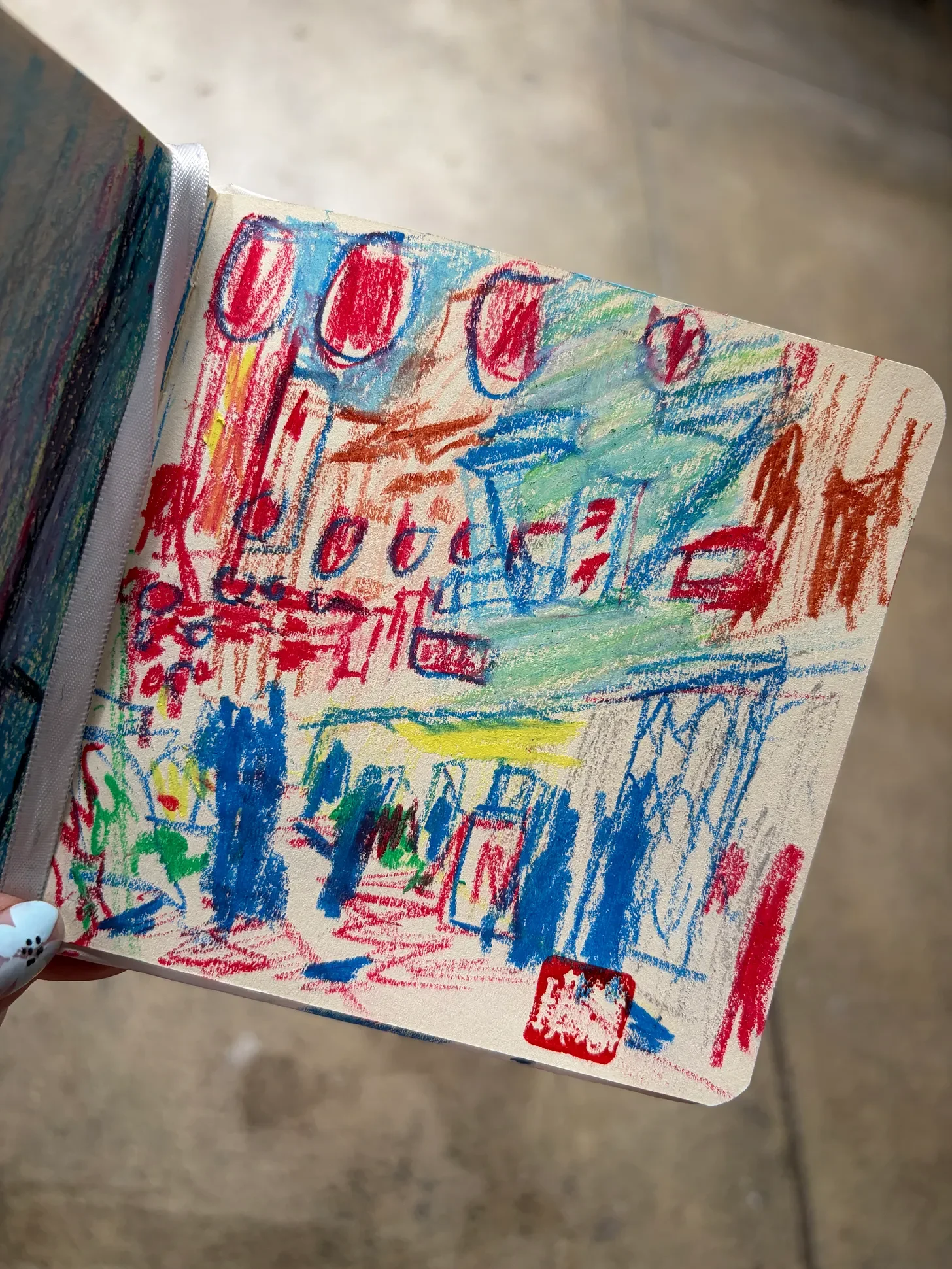
NeonQi, Chinatown Alley, 2026
It reminded me how much I love this type of art and creating that really just emerges from experience. Not that it’s spontaneous or unintentional, but it pulls itself out of you— something that can’t be planned, maybe only be prepared for.
As I continue working on my own art, I constantly find myself at a crossroads at what I should be prioritizing, forgetting what is important to me. Pushing yourself in these moments reveals what it is that you truly want to capture. I understand that my internal compass always points me back one way and I’m learning to trust that and that it also doesn’t guarantee a steady path.
Seeing Monet still struggle with direction later in his career was refreshing. I’m realizing that I’ve been playing it too safe and too worried about it all. I see that the struggle is a part of the journey and not a symptom of anything going wrong. Monet’s struggle led him to Venice and then to finish his waterlilies as we know them today. It’s hard to know how it will play out in the moment, but it can only be discovered as you keep pushing forward.
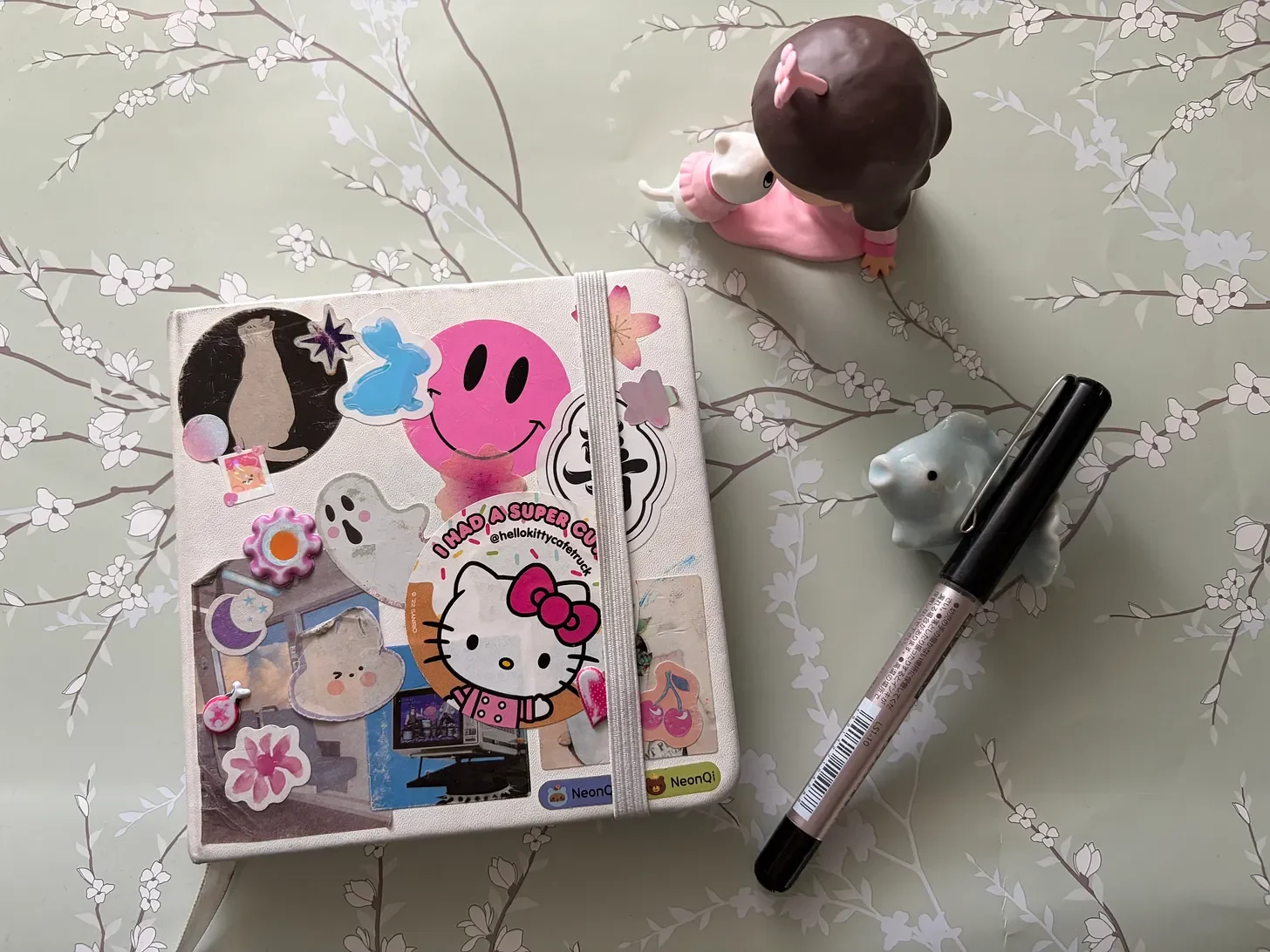
goodbye, sketchbook <3
